
Herbal Myth vs. Fact: No, Stronger Tea Isn’t Always Better

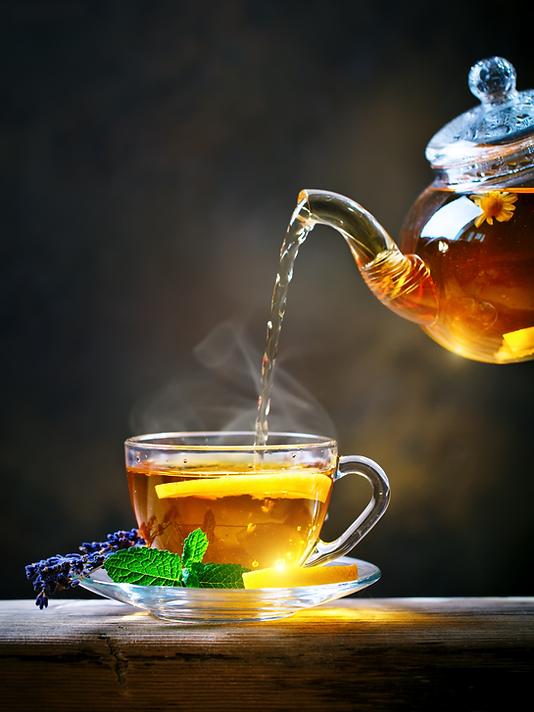
MYTH: “If an herbal tea is good for me, making it extra strong must make it work even better.”
FACT: More herb, hotter water, and longer steeping do not automatically make an herbal preparation more beneficial. Depending on the plant, increasing the concentration can change what is extracted, how much of it you consume, how the tea tastes, and most importantly how your body responds.
One of the easiest mistakes to make with herbal tea is treating herbs as though they follow a simple formula:
More herb = more benefits.
Herbal preparation is much more nuanced than that.
A properly prepared cup of herbal tea is an extraction. Water pulls certain chemical constituents from plant material, but the amount and types of constituents extracted depend on the plant, plant part, water temperature, steeping time, particle size, herb-to-water ratio, and preparation method.
That means a lightly steeped peppermint tea, a 30-minute nettle infusion, and a simmered ginger decoction aren't simply three different strengths of the same process. They are different preparations designed around different plant materials and purposes.
Understanding this is one of the most important steps in moving from simply drinking herbs to learning how to prepare them thoughtfully.
First: Herbal Tea Is an Extraction
When you pour water over an herb, you're using water as a solvent. The water begins extracting water-soluble or partially water-soluble compounds from the plant material.
Depending on the herb, these may include compounds such as:
polyphenols
flavonoids
tannins
mucilage and polysaccharides
minerals
some vitamins
bitter compounds
glycosides
organic acids
some aromatic compounds
But plants contain many different compounds and they don't all behave the same way in water. Some extract readily within minutes. Others need considerably more time. Some plant material benefits from simmering. Certain delicate aromatic constituents can be lost through prolonged heating or evaporation.
So, when someone says, “I steep every herb for 30 minutes because I want it strong,” they're overlooking one of the fundamentals of herbal preparation: The herb determines the preparation not your desire to make the strongest possible tea.
Strength and Effectiveness Are Not the Same Thing
A tea can be extremely concentrated without being the most appropriate preparation. Think about cooking. If a recipe calls for one teaspoon of salt, adding four tablespoons doesn't make the food four times better. The ingredient may be useful, but there is still an appropriate amount for the dish. Herbs work differently from salt, of course, but the principle is useful.
Increasing the amount of plant material can increase the concentration of certain extracted constituents. That doesn't mean the resulting preparation becomes proportionally more useful.
Instead, you may simply create:
excessive bitterness
excessive astringency
digestive irritation
nausea
headaches or other unwanted effects
an unnecessarily concentrated preparation
a higher likelihood of herb–drug interactions
greater exposure to naturally occurring plant compounds that may have dose-dependent effects
This is particularly important with herbs containing pharmacologically active constituents.
Natural does not mean unlimited.
What Actually Determines the Strength of Herbal Tea?
There isn't one single factor. Several variables work together.
1. The Herb-to-Water Ratio
This is the most obvious variable. Using one tablespoon of herb in one cup of water produces a different concentration than using four tablespoons in the same amount of water. But adding more plant material eventually becomes unnecessary and, depending on the herb, potentially inappropriate.
Professional herbal preparations are often described using ratios or weight-to-volume measurements because “a handful” can vary enormously. A tablespoon of fluffy dried mullein leaf does not weigh the same as a tablespoon of dense dried elderberries or chopped roots. For greater consistency, especially when developing formulas, weight is often more useful than volume.
2. Steeping Time
A five-minute infusion is chemically different from one that sits for several hours. Extraction occurs over time. Initially, readily water-soluble compounds move into the water. As the infusion continues, additional compounds may be extracted and their concentrations may increase.
This is why some herbs are traditionally prepared as longer infusions while others are commonly prepared as shorter teas.
But this doesn't mean: “If 15 minutes is good, eight hours must be better.”
Longer extraction can substantially change flavor and constituent concentration. A long-steeped tannin-rich herb, for example, may become intensely astringent. Preparation time should therefore be selected according to the herb and desired preparation rather than automatically maximizing extraction.
3. Water Temperature
Temperature matters because heat influences extraction. Hot water generally extracts many plant compounds more rapidly than cool water. But boiling water isn't automatically ideal for every preparation.
Hot infusions are commonly used for many leaves and flowers. More durable plant material such as certain roots, bark, berries, or seeds may be simmered as a decoction. And some plants are intentionally prepared using cool or room-temperature water. A classic example is marshmallow root (Althaea officinalis).
Marshmallow contains abundant mucilage: complex polysaccharides that become slippery when hydrated. A cool-water infusion is commonly used when the goal is to emphasize this soothing, mucilaginous quality.
That doesn't mean marshmallow can never encounter hot water. It means preparation method can be chosen according to the constituents and qualities you're trying to obtain.
This is why simply boiling every herb aggressively is not sophisticated herbal preparation.
4. The Part of the Plant Matters
“Herbal tea” is an umbrella term. You might be working with:
Flowers: chamomile, calendula, hibiscus
Leaves: peppermint, lemon balm, nettle
Roots: ginger, dandelion, marshmallow
Bark: cinnamon
Seeds: fennel, coriander
Berries: elderberry, hawthorn
Aerial parts: self-heal, yarrow and many other herbs
Different plant structures require different preparation considerations. Tender leaves and flowers generally release constituents relatively easily. Dense roots, bark, seeds, and some fruits can require additional processing, crushing, longer extraction, or simmering.
That is one reason traditional herbalism distinguishes between an infusion and a decoction.
Infusion vs. Decoction: They're Not Interchangeable
Infusion
An infusion is generally made by pouring water over plant material and allowing it to steep. It is commonly used for leaves, flowers, and other relatively tender plant parts. Your everyday cup of herbal tea is essentially an infusion.
Decoction
A decoction generally involves placing plant material in water and gently simmering it for a period of time.
This method is often used for tougher materials such as certain:
roots
bark
seeds
dried berries
woody plant parts
Simmering helps water penetrate dense plant tissue and extract compounds that may not be released as efficiently during a short steep. But even here, longer isn't automatically better. The appropriate method depends on the specific herb.
Some Herbs Are Better Covered While Steeping
Have you ever wondered why some herbal instructions tell you to cover your cup? It isn't just about keeping the tea warm. Aromatic herbs such as peppermint, lemon balm, lavender, and chamomile contain volatile aromatic compounds.
“Volatile” means these compounds can readily evaporate. If you pour hot water over an aromatic herb and leave the container uncovered, some of those aromatic constituents escape with the steam. That's part of what you're smelling above your cup.
When preparing aromatic herbs, covering the vessel during steeping can help retain more of those volatile components in the preparation. So sometimes improving your tea isn't about making it stronger at all. It's about preparing it better.
Stronger Can Also Mean More Tannins
Tannins are naturally occurring polyphenolic compounds found in many plants. They contribute to the drying, puckering sensation known as astringency.
Think about:
strongly brewed black tea
certain barks
unripe fruit
some berries
oak-rich preparations
That dry feeling in your mouth is partly caused by tannins interacting with proteins in saliva. Longer extraction or greater quantities of tannin-rich plant material can produce an increasingly astringent preparation.
Moderate astringency may be exactly what someone wants from a particular herb. But making that preparation excessively strong doesn't necessarily provide additional benefit. It may simply make the tea unpleasant or harder on the digestive system.
There is another consideration: tannins can bind with non-heme iron, the form of iron found primarily in plant foods, and can reduce its absorption when consumed around meals. That doesn't mean tannin-containing teas are “bad.” It means dose, timing, and context matter.
More Isn't Always Better with Bitter Herbs Either
Bitterness is another good example. Bitter herbs have traditionally been used before meals or incorporated into digestive preparations because bitter taste receptors participate in digestive signaling. But the goal isn't necessarily to create the most painfully bitter drink possible.
Increasing the concentration of a bitter herb may make a preparation difficult to tolerate and, depending on the herb and person, could contribute to nausea or digestive discomfort. Herbalism isn't a contest to see who can tolerate the strongest brew. The goal is appropriate preparation and appropriate use.
What About Long Herbal Infusions?
This is where the conversation becomes more nuanced. A long infusion isn't inherently “too strong.”
Some herbs are intentionally prepared as long infusions. Certain nutritive herbs are steeped for several hours because the goal is to extract substantial amounts of water-soluble constituents from the plant material.
Examples often used in longer infusion traditions include herbs such as:
nettle leaf
oatstraw
red clover
linden, depending on the preparation tradition
But notice the distinction:
A long infusion is being chosen intentionally for that particular herb and purpose. It is not evidence that every herbal tea should steep overnight. That difference matters.
Herbal Tea Bags Can Create Another Misconception
Commercial tea bags make herbal preparation wonderfully convenient, but they can also make people think every herb should be prepared the same way.
Put bag in cup.
Add boiling water.
Wait five minutes.
Remove bag.
Drink.
That works reasonably well for many everyday teas. But traditional herbal preparations can be much more specific.
Some herbs may benefit from:
crushing before preparation
covering while steeping
longer infusion
cold infusion
simmering
straining through fine cloth
being prepared fresh rather than dried
For example, mullein leaf preparations should be strained particularly well because the leaf is covered in tiny hairs that can irritate the throat if they remain in the finished liquid. The preparation method is part of using the herb responsibly.
“But I've Been Drinking Very Strong Herbal Tea and I Feel Fine.”
That is entirely possible. People vary.
Our response to an herbal preparation can be influenced by:
body size
age
pregnancy or breastfeeding
health conditions
liver and kidney function
medications
supplements
allergies
sensitivity to specific plant compounds
frequency of consumption
amount consumed
the specific herb
the concentration of the preparation
A preparation tolerated by one healthy adult may not be appropriate for another person. And tolerance isn't always proof that increasingly larger amounts are beneficial. This is particularly important when people begin combining numerous herbs into one highly concentrated daily tea.
If you're using five, eight, or twelve herbs at once, you are no longer simply asking:
“Is this herb safe?”
You're also asking:
“Are these herbs appropriate together, at these amounts, at this frequency, for this person?”
Those are different questions.
More Herbs Doesn't Automatically Make a Better Formula
Another herbal myth closely related to “stronger is better” is: “The more herbs I put into my tea, the more benefits I'll get.” Not necessarily.
A thoughtfully designed three-herb formula can make considerably more sense than a random fifteen-herb mixture.
Good formulation considers the role of each plant.
Why is it there?
What does it contribute?
Does another herb already serve that purpose?
Are their actions complementary?
Does one plant introduce a contraindication that wasn't present before?
Does the combination create an unpleasant or unnecessarily concentrated preparation?
A formula should have purpose, not just a long ingredient list.
Herbal Safety Changes with Dose
One of the most important concepts in herbal education is dose-response. Many substances can behave differently depending on the amount consumed. This isn't unique to herbs.
Water, caffeine, vitamins, minerals, medications, salt, and countless other substances all demonstrate the same basic principle: quantity matters.
Plants contain biologically active compounds. Some culinary herbs have broad margins of safety when used in normal food amounts. Other medicinal herbs require considerably more caution. Increasing the concentration can increase your exposure to active compounds.
That is especially important with herbs that may:
affect blood pressure
influence blood glucose
affect blood clotting
cause sedation
stimulate the nervous system
influence hormones
have laxative effects
act as strong diuretics
interact with medications
be inappropriate during pregnancy
require limits on duration of use
So, when a recipe gives an amount, don't automatically double or triple it because you want “faster” results.
A Strong Tea Is Not a Substitute for Medical Treatment
Herbal tea can be part of food traditions, cultural practices, daily wellness routines, and complementary herbal care. But making a tea increasingly concentrated doesn't turn it into a treatment for a serious medical condition.
If someone has persistent symptoms, severe symptoms, unexplained pain, significant bleeding, breathing difficulty, signs of infection, or another potentially serious health concern, the answer isn't simply: “Make the tea stronger.”
Appropriate medical evaluation matters. Herbal medicine is best practiced with respect for both traditional knowledge and modern safety information not by assuming every problem can be solved through a larger dose.
Does This Mean Weak Tea Is Always Better?
No. That would simply replace one myth with another. Some preparations genuinely need adequate quantities of plant material and sufficient extraction time.
If you barely steep a dense root for two minutes, you may not create the preparation you intended. If you use a tiny pinch of an herb in a huge pot of water, you may end up with little more than flavored water.
The lesson isn't:
“Always make weak tea.”
The lesson is:
Prepare each herb appropriately.
Sometimes that means a short infusion.
Sometimes a longer infusion.
Sometimes a decoction.
Sometimes a cold infusion.
Sometimes a strong preparation is completely intentional.
The key difference is that the strength should have a reason.
A Better Way to Think About Herbal Tea
Instead of asking:
“How can I make this as strong as possible?”
Ask:
“What is the appropriate way to prepare this particular herb?”
Then consider:
What herb am I using? Confirm the correct species rather than relying only on a common name.
Which plant part am I using? Leaf, flower, root, bark, berry, seed, and aerial parts aren't automatically prepared identically.
Is it fresh or dried? Fresh and dried herbs can differ considerably in water content and concentration by weight.
What preparation is appropriate? Short infusion, long infusion, cold infusion, decoction, tincture, glycerite, oil infusion, or another method?
How much plant material is appropriate? More isn't automatically better.
How long should it extract?
What temperature is appropriate?
Should the vessel be covered?
How frequently will I drink it? One occasional cup and multiple concentrated cups every day represent very different levels of exposure.
Are there contraindications or interactions? This becomes particularly important with medications, pregnancy, breastfeeding, children, chronic conditions, surgery, or multiple herbal products.
Consistency Matters More Than Guessing
If you're serious about learning herbal preparation, start measuring. You don't need to turn your kitchen into a laboratory, but keeping simple notes can make a tremendous difference.
Record:
Herb: Nettle leaf
Botanical name: Urtica dioica
Plant part: Leaf
Form: Dried
Amount: ___ grams
Water: ___ ounces/mL
Temperature: ___
Steeping time: ___
Covered: Yes/No
Taste/aroma/color: ___
Purpose: ___
Now you can actually reproduce the preparation. This is particularly useful when creating herbal blends because you're no longer relying on vague measurements such as “a handful of this and a little of that.” Herbal knowledge becomes much more useful when it is repeatable.
Respect the Plant, Not Just the Trend
Social media has helped introduce millions of people to herbalism, foraging, gardening, and traditional plant knowledge. That can be a beautiful thing. But it has also encouraged a culture of extreme herbal preparations:
“Boil this until the water turns black.”
“Drink a gallon every day.”
“Use ten times the recommended amount.”
“Combine these 18 herbs.”
“If you don't feel something immediately, make it stronger.”
That isn't automatically better herbalism. Traditional plant knowledge is often highly specific about which plant, which part, how it is prepared, how much is used, when it is taken, and who should or shouldn't use it. The details matter.
The Bottom Line
Stronger herbal tea isn't automatically better herbal tea. More plant material can increase the concentration of extracted compounds, and longer steeping or higher temperatures can change the chemical profile of a preparation. Sometimes that is exactly what you want. Other times it produces an unnecessarily bitter, astringent, irritating, or overly concentrated drink.
The goal isn't to make every cup as powerful as possible. It is to understand the plant well enough to prepare it appropriately.
Learn the species.
Learn the plant part.
Learn which constituents you're trying to extract.
Learn whether the herb calls for an infusion, long infusion, cold infusion, or decoction.
Learn an appropriate amount and frequency. And learn its contraindications before turning it into part of your everyday routine. Because when it comes to herbs, more isn't automatically better, better preparation is better.
Herbal Safety Note
This article is for educational purposes and is not a substitute for individualized medical care. Herbal safety depends on the specific plant, species, plant part, preparation, amount, frequency, and individual using it.
Pregnant or breastfeeding individuals, children, people taking prescription medications, people preparing for surgery, and those with chronic medical conditions should use additional caution and seek guidance from an appropriately qualified healthcare professional when using medicinal herbs.
Always correctly identify herbs before using them, especially wild-foraged plants. Common names can refer to multiple species, and preparation recommendations for one plant should not automatically be applied to another.
Herbalism isn't about making everything stronger. It's about knowing what you're working with.
Comments